
Just testing for coverage wont eliminate connection drop outs. Multiple factors affect Wi-Fi performance other than coverage, such as client device capabilities and capacity, how client devices roam and how this roaming may affect throughput, as well as other factors such as interference, which can be caused by the configuration of the Wi-Fi network, or other non-Wi-Fi devices and other Wi-Fi networks.
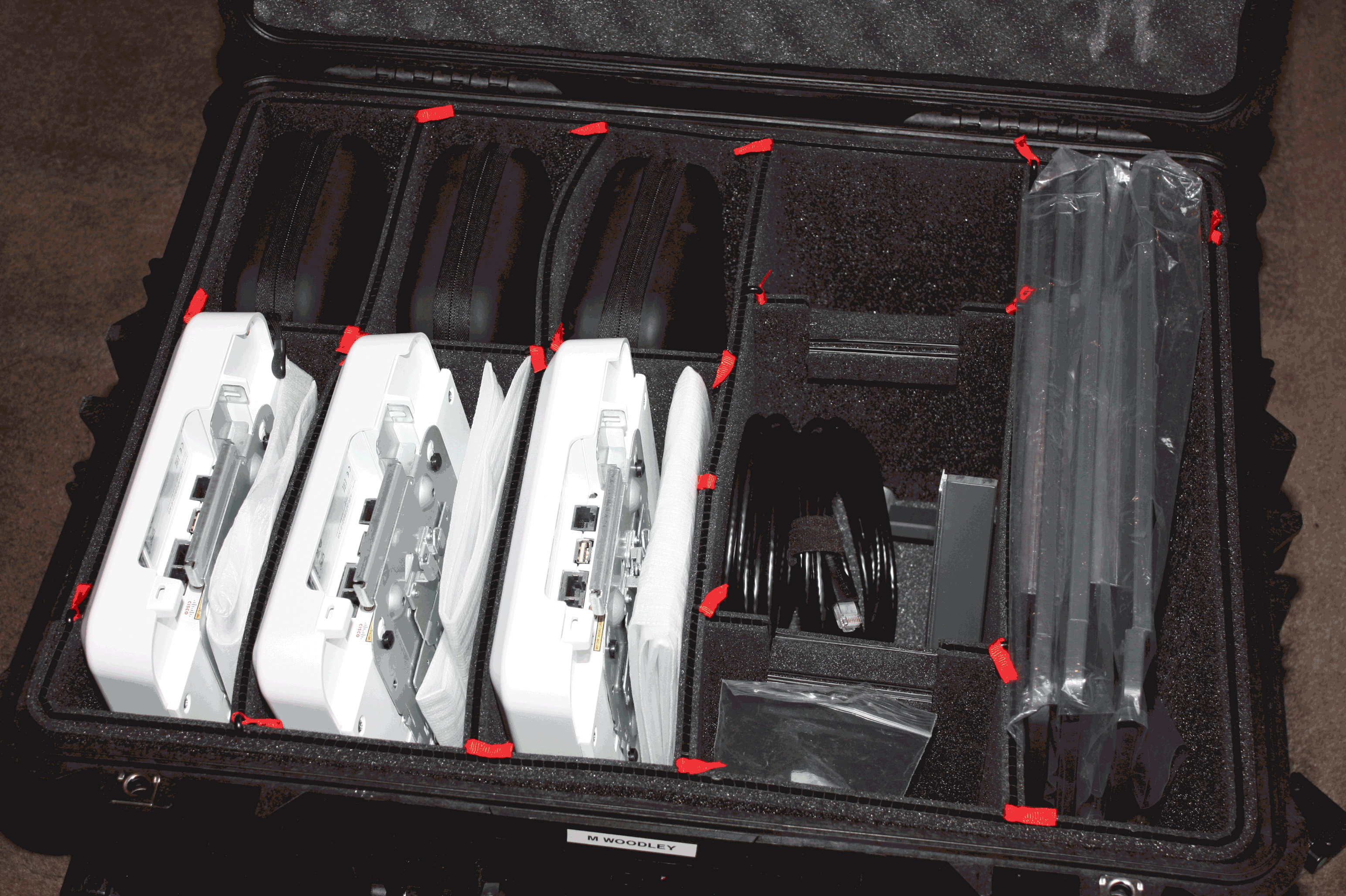
We use multiple APs, specialist AP survey brackets, tripods, and compact survey batteries for a number of important reasons:
- It allows us to carry out thorough tests, and do this more quickly.
- It allows us to check in a reasonable amount of time, how our Wi-Fi design creates interference, which is something we want to avoid. The potential interference from an AP extends a long way out to a power of about -86dBm (depending on the particular Wi-Fi standard in use). This can extend between floors and across most of the floor, and it would be time-consuming to have to survey these areas over and over again for each AP position. Using multiple APs lets us survey the interference from a particular group of APs in one go, thus saving time, without impacting the measurement of this important quantity.
A survey report that does not contain measurements out to the -86dBm level will be seriously incomplete, because it wong account for the internal contention/interference from the Wi-Fi design itself, and how that will ultimately affect performance. - Roaming is especially critical to the performance of devices on the Wi-Fi and this can only be tested using multiple APs. We are therefore able to baseline APs for performance, and test roaming for the design, which is essential to eliminate connection drop outs.
