Here are a sample of some projects where we have provided Wi-Fi design services and technical direction.
For our strategic initiatives, see our news pages.
|
We have assisted the Council with specialist support to resolve vendor-specific Wi-Fi implementation issues. Using a remote management platform and where necessary on-site statistical analysis, protocol analysis and spectrum analysis. We have been able to resolve a major issue with the Wi-Fi protocol. |
|
|
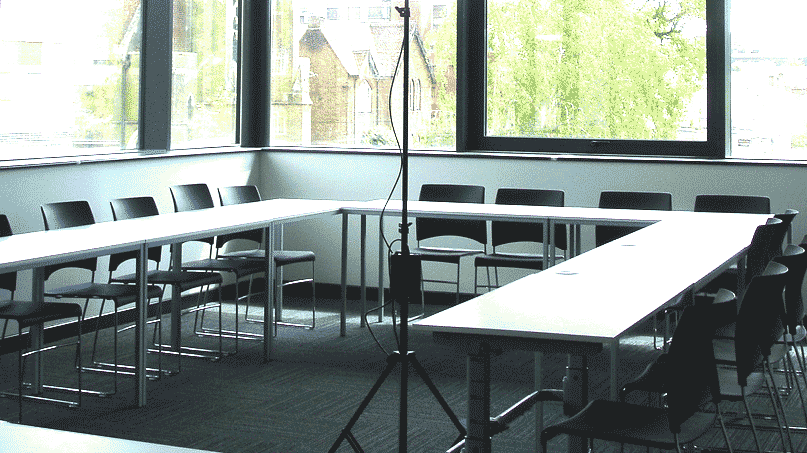
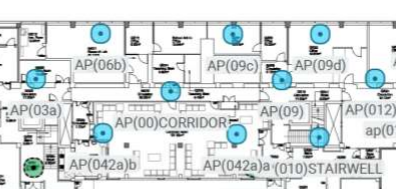
We worked with Bedford Hospital in 2017 to upgrade their Wi-Fi to deliver NHS Wi-Fi. This initial design was based on predictive models due to budgetary constraints at the time. However, we were able to demonstrate the benefits of an APoaS based design going forward. From the latter half of 2020, as part of a merger with nearby Luton & Dunstable Hospital, Bedford Hospital are now installing Meraki Wi-Fi 6 APs in some areas, whilst retaining Cambium Wi-Fi 5 APs in other areas. The new Wi-Fi is an important part of a digital transformation strategy to migrate all paper records to integrated electronic clinical systems. We provided the Trust with a set of recommendations around the design parameters for their Wi-Fi, to provide them with a baseline for the Trust-wide rollout. We documented these recommendations with detailed explanations. The configuration was particularly challanging as there are two vendor solutions on site, that could potentially clash with each other if not managed inclusively. For each major building we provided an APoaS design based on these recommendations, and provided prescriptive instructions to ensure that the installation and configuration of the APs was optimal. Our extensive reports covered design and configuration options, including the placement of APs, detailed installation instructions including the required cable runs and lengths, and marked-up photographs. After installation we were able to validate the implementation to ensure that it had been installed and configured correctly, that it met the designed criteria and that it delivered the designed performance, which it did. All this was done during the second wave of the COVID-19 pandemic. |
|
|
|
Working under a sub-contract arrangement for a leading UK Wi-Fi supplier over the summer of 2020, we have also designed school Wi-Fi using AP-on-a-Stick Survey techniques, using Ruckus APs. |
|
Sherborne School is an English independent boarding school for boys, in Dorset. The school has been in continuous operation on the same site for over 1,300 years. The school needed to upgrade their Wi-Fi to provide enhanced coverage and performance for their boarders, but they had not yet decided on a Wi-Fi vendor. A vendor-independent Wi-Fi survey was required, to understand the design constraints of Wi-Fi 6 and the implications of those constraints on final AP quantities and configurations, before a procurement exercise could begin. During the spring and summer of 2020 we conducted a detailed Wi-Fi survey of all the main school buildings. Many of the older buildings date back many years and have thick stone walls which presents a challenging RF environment for Wi-Fi 6, particularly as the highest Wi-Fi 6 data rates are attainable at short ranges. In many cases however, such performance was not necessary to meet the required capacity. We therefore provided comprehensive APoaS Wi-Fi survey reports, to demonstrate design options from a number of different possible positions, so that it was possible to derive a final Wi-Fi design that met the required capacity, and provide the best performance for their particular investment. |
|
|
King Edward VI College, Stourbridge had an end-of-life Wi-Fi implementation that had a deadline for upgrade over the summer of 2020. In order to issue an open tender, the commissioned a vendor-independent Wi-Fi survey and design. At the start of the first lockdown, we undertook a detailed APoaS Wi-Fi survey of all areas within the college. We provided our recommendations for a design specification, together with recommended configuration settings, so that the school could procure a solution that met their requirements on an apples-for-apples basis. For the sample settings we provided detailed reports including heat maps for each individual AP, that showed for each band, the impact that AP would have across the building and between floors. We included collective heatmaps showing not only the key performance metrics of Signal-to-Noise ratio and Signal Strength, but other metrics to demonstrate how the design will support client roaming, and metrics to help with capacity planning and channel planning should any changes be required. We also included a detailed tutorial to explain the interplay of configuration parameters on the performance of the Wi-Fi implementation, should any configuration changes be required. This steered the procurement and implementation of an excellent replacement Wi-Fi solution, and the College were very pleased with the results. |
|
|
Real-Time Location Services
|
During 2020, working under a sub-contract arrangement, with a Cisco Gold Partner, we have also done design work for hyper-location services. Clients on each floor of a building can be located accurately by triangulating the Angle-of-Arrival of signals to APs on the same floor. A special arrangement of APs is required to form the apexes of equilateral triangles, and additional APs need to be placed at the edges of the building to create a geometric convex hull, sized to ensure that a client can access at least 3 APs from any one position. The spacing of the APs depends on the client power characteristics, after impairments such as the attenuation of RF caused by the building's walls, is taken into account. |
|
International Colleges within |
During 2020, working under a sub-contract arrangement, for a Cisco Gold Partner, we have also completed Meraki Wi-Fi designs for an international college with bases at several Russell Group Universities. Detailed APoaS survey-based designs were prepared based on APs configured for optimal performance and data roaming. Consideration was also given to practical AP mounting, although for this requirement a calculation of cable runs was not requested. Detailed reports were provided showing overall Wi-Fi quality metrics for each floor and detailed instructions were provided for each AP, including the AP configuration, the map position within each room, and a marked-up photograph showing where the AP was to be mounted. |
|
We have provided Wi-Fi designs, APs and configuration advice, to expand the existing college Wi-Fi infrastructure, into college new builds. As part of an ongoing arrangement, we are working with the college to evaluate the impact of Wi-Fi 6 in the college environment. |
|
|
|
We completed a sub-contract arrangement for a leading Wi-Fi supplier, to provide designs and high-level reports for the deployment of Wi-Fi within retail stores around the UK and a distribution warehouse.. |
|
Sandwell and West Birmingham Hospitals NHS Trust (SWBH) is one of the largest NHS teaching Trusts in England, with a number of hospital sites, including Sandwell Hospital in West Bromwich and City Hospital in Birmingham. A further flagship site, the Midland Metopolitan Hospital is still under construction. A migration of all clinical systems to digital meant that Wi-Fi was required everywhere within the hospital. But a basic audit of the existing Wi-Fi had already determined that there were coverage holes. As part of the wider project team, IP Networks provided the advice on how to best address this, against often competing objectives. An initial survey was commissioned across the whole of the Sandwell site to identify the Wi-Fi issues. Whilst the lay view was that this was simply a matter of placing APs where there were gaps and simply boosting the signal, the reality was that this would aggravate the issues with the Wi-Fi, and make things worse. There were restrictions imposed on the physical placement of APs, often in line of sight of each other, due to some Health and Safety requirements for installation in a live setting. So AP positions required remediation to avoid capacity issues. It soon became apparent that there were also issues with the Wi-Fi configuration, with wide channel widths and power level ranges that did not work for the AP positions. That is because the recommended configuration where a high number of APs have line of sight of each other, is actually counter to a default coniguration. The theory and explanation is documented, in the Aruba Networks, Validated Reference Design for Very High-Density 802.11ac Networks.(A precis of which we will provide as a technical article). Our initial recommendation, was that the Wi-Fi design strategy needed to be based on a balance between the defaults and the VRD parameters, to achieve the Trust's objectives. A hybrid design model was then produced, based on actual observations, and the calculated effect of the revised configuration. From this we were able to agree a plan to remediate the Wi-Fi, taking into account physical limitations on the placement, in real time. This also provided the specification for the procurement process. As the project was under tight timescales, there was a daily huddle meeting so that members of the team from different disciplines, could share the practical requirements of the rollout, and achieve the initial remediation. After independent validation, and a few minor tweaks, this initial remediation was shown to meet our remit of addressing issues with Wi-Fi coverage, pending our recommendations to changes in the configuration. We continued doing the same at City Hospital and the satellite sites. In the case of some greenfield sites, we were also able to design to the ideal parameters, by doing an APoaS survey, with APs set to these parameters, which again met our remit, pending the Trust's implementation of our recommended configuration.
|